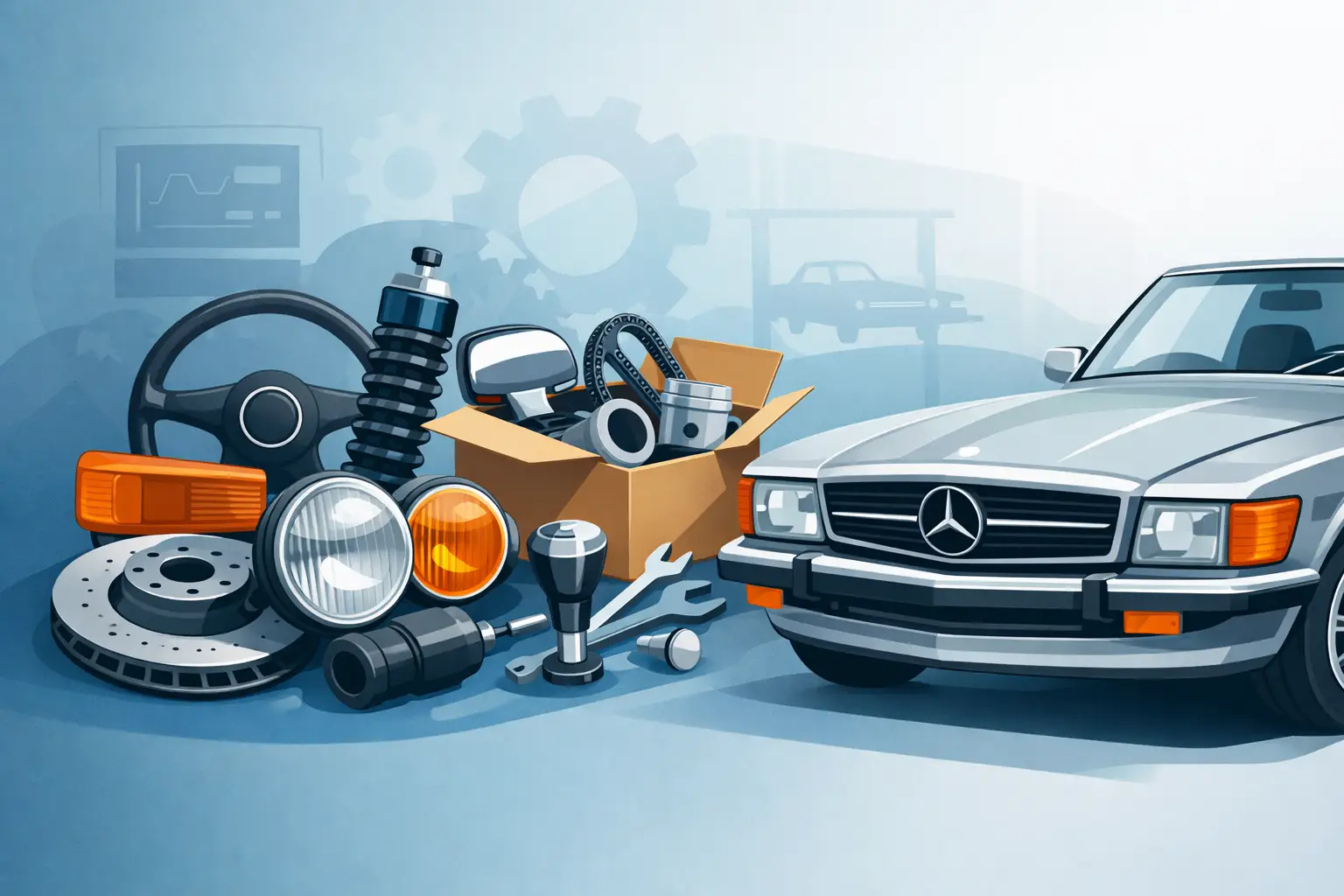
The difference between a usable R107 and a properly sorted car usually comes down to parts selection. Anyone shopping for w107 restoration parts already knows the problem: the car may look complete at ten feet, but once you get into trim, seals, lighting, interior hardware, and age-sensitive mechanical components, the details start separating a quick fix from a correct restoration.
For the W107 platform, buying parts is not just about replacing what is broken. It is about matching chassis, year range, engine application, finish, and factory-style fitment. That matters whether you are refreshing a driver-grade 380SL, bringing a 450SL back to original condition, or correcting years of mixed repairs on a 560SL.
What makes W107 restoration parts tricky
The W107 was built across a long production run, and that creates the first challenge. Early and late cars can look similar to casual buyers, but many parts are not interchangeable in the way people assume. Exterior lighting, bumper components, climate control pieces, interior trim details, switchgear, and emissions-related engine parts can vary by market and model year.
That is why catalog accuracy matters. A generic listing for a “107 part” is often not enough. Serious buyers usually need to confirm whether the part fits a specific 280SL, 350SL, 380SLC, 450SLC, 500SL, or US-spec 560SL configuration. If you are trying to preserve originality, even finish differences matter. Chrome, black trim, lens markings, wood variations, and upholstery details all affect the result.
The second challenge is quality spread. Some replacement parts install cleanly and look right. Others technically fit but create extra labor, poor panel alignment, weak sealing, or an obvious mismatch once mounted. On a W107, low-grade rubber, poor chrome quality, and incorrect interior textures stand out fast.
Where to focus first when sourcing w107 restoration parts
Most restorations do not start with the glamorous items. They start with the parts that affect drivability, water intrusion, safety, and visual correctness. For many W107 owners, that means dividing the car into five practical areas: body seals and exterior trim, lighting and electrical, interior components, braking and suspension, and engine bay service items.
Exterior trim and seals
This is where many R107 projects show their age. Sun-baked seals, cracked molding, tired bumper trim, weathered mirrors, and pitted brightwork can drag down the entire car. Replacing these parts does more than improve appearance. Proper seals reduce wind noise, water leaks, and fitment issues around doors, trunk lids, tops, and glass.
Trim pieces deserve extra attention because they are often expensive, visible, and difficult to source in the correct finish. If you are working on a higher-end restoration, this is not the area to guess. A slightly wrong trim profile or poor reproduction surface can make a finished car look pieced together.
Lighting and electrical
W107 lighting is one of the fastest ways to improve an aging car, but it is also a category where market-specific differences matter. Headlamp assemblies, tail lamps, side markers, lenses, and related hardware need to match the car correctly. Electrical restoration often extends beyond visible lighting into switches, relays, window components, blower motors, and instrument-related parts.
On these cars, electrical issues are often cumulative. One failed switch may be obvious, but brittle connectors, aged sockets, and improvised repairs from prior owners are just as common. Replacing parts one by one can work on a driver, but a more complete correction is usually the better long-term move.
Interior parts
The W107 cabin is simple, elegant, and expensive to get wrong. Seat trim, dash pieces, console wood, handles, vents, knobs, carpet sets, and soft top related interior trim all have a major impact on perceived quality. A tired interior can make a mechanically sound car feel neglected.
Interior restoration is where model-correctness becomes especially important. Color, grain, stitching style, and hardware finish need to work together. If the goal is resale value or collector-level presentation, mixed materials and generic replacements usually show immediately.
Suspension, steering, and brakes
Many W107 owners chase cosmetic parts first and save chassis work for later. That is understandable, but these cars reward a proper suspension and brake refresh. Control arm bushings, tie rod assemblies, steering components, subframe mounts, shocks, brake hydraulics, and wear items can transform the car.
A W107 that tracks correctly, brakes confidently, and rides the way Mercedes intended feels expensive in the best way. A car with loose steering and tired bushings feels older than it is, even if the paint and chrome are excellent.
Engine bay and fuel system components
Vacuum lines, fuel delivery parts, ignition components, cooling system pieces, belts, hoses, mounts, and service hardware are rarely headline items, but they are restoration parts in the most practical sense. The W107 is now old enough that rubber, plastic, and heat-cycled engine bay components are often overdue regardless of mileage.
For US-market cars, emissions-era equipment and fuel injection components can complicate repairs. The right approach depends on the car. A weekend driver may need a reliability-first refresh. A collector car may require a more exacting model-correct replacement strategy.
How serious buyers avoid the wrong part the first time
The best parts buyers are methodical. They do not shop by visual similarity alone. They verify chassis applicability, production year, engine type, and if needed, VIN-specific details before ordering. That is especially important for W107 restoration parts because small differences can create delays, returns, and unnecessary labor.
Photos help, but part descriptions, fitment notes, and category organization matter more. A strong catalog should let you move by system and by model, whether you are sourcing exterior parts, fuel system components, interior hardware, or lighting assemblies. That is the practical advantage of buying from a specialist rather than trying to patch together a restoration from broad-market sources.
It also helps to decide early what kind of project you are building. A driver-level car and a top-tier restoration do not always need the same parts strategy. Some owners prioritize dependable mechanical operation and clean cosmetics. Others are trying to return the car to factory-style condition with the right trim details, period-correct lighting, and interior finishes that match original presentation.
Neither approach is wrong. The mistake is mixing standards without realizing it. Spending heavily on visible trim while ignoring the suspension, or restoring the interior while leaving failing seals and electrical faults, usually creates a car that still feels unfinished.
OEM-style fitment versus generic replacement
This is where cost and outcome meet. W107 owners often face a simple choice: buy the cheapest available replacement, or spend more for parts with better fit, finish, and model accuracy. In some hidden service categories, a value-oriented part may be acceptable. In visible exterior, interior, and trim categories, the cheaper option often costs more in labor, frustration, or rework.
OEM-style fitment matters because these cars have clean lines and tight visual expectations. Door seals that sit wrong, marker lenses with incorrect shape, poorly finished wood trim, or low-grade bumper components do not blend in. They advertise themselves.
For shops and experienced hobbyists, this is not academic. Labor time has value. A part that installs correctly the first time is often the better buy, even at a higher upfront price.
Shopping by category saves time
A well-organized parts source makes restoration planning easier. If you can move directly from brakes to electrical, then to exterior and interior parts, you can build the job in a realistic order. That is especially useful on W107 projects where one repair often exposes the next. Replacing a tail lamp may reveal missing seals and damaged hardware. Pulling interior trim may expose broken clips, aged insulation, or cracked switch components.
Mercedes Parts Zone serves this type of buyer well because the catalog is built around classic Mercedes applications rather than generic aftermarket browsing. For W107 owners, that means a more direct path to the right categories, specialty components, and model-relevant inventory.
The best time to buy W107 restoration parts
Usually before the car is apart. That sounds obvious, but many restorations stall because the owner starts disassembly without confirming parts availability across the full scope of the job. On a W107, the smarter move is to identify the known wear areas first, then build a purchase plan around what is visible, what is age-sensitive, and what will be inaccessible once adjacent components are reinstalled.
If your car needs weatherstripping, lighting, interior trim, and front suspension work, it is more efficient to map those systems together than to buy one emergency part at a time. That keeps the project moving and helps avoid duplicate shipping, backtracking, and improvised solutions.
The W107 market rewards patience and accuracy. Buy the correct part once, install it properly, and the car usually tells you the truth right away. It closes better, feels tighter, drives cleaner, and looks like a Mercedes again.