A W113 cabin tells on the car faster than the paint does. Seat pads collapse, wood cracks, chrome pits, and one incorrect knob or pull strap can make an otherwise strong Pagoda feel pieced together. That is why sourcing the right w113 pagoda interior parts matters – not just for appearance, but for fit, function, and long-term value on a 230SL, 250SL, or 280SL.
For most owners, the challenge is not identifying that something needs attention. It is figuring out whether the part should be replaced, restored, or left alone, and whether the replacement is truly correct for the chassis and production period. A driver-quality refresh has different priorities than a full restoration, and the best buying decisions usually come down to how original the car is today and how far you want to take it.
What falls under W113 Pagoda interior parts
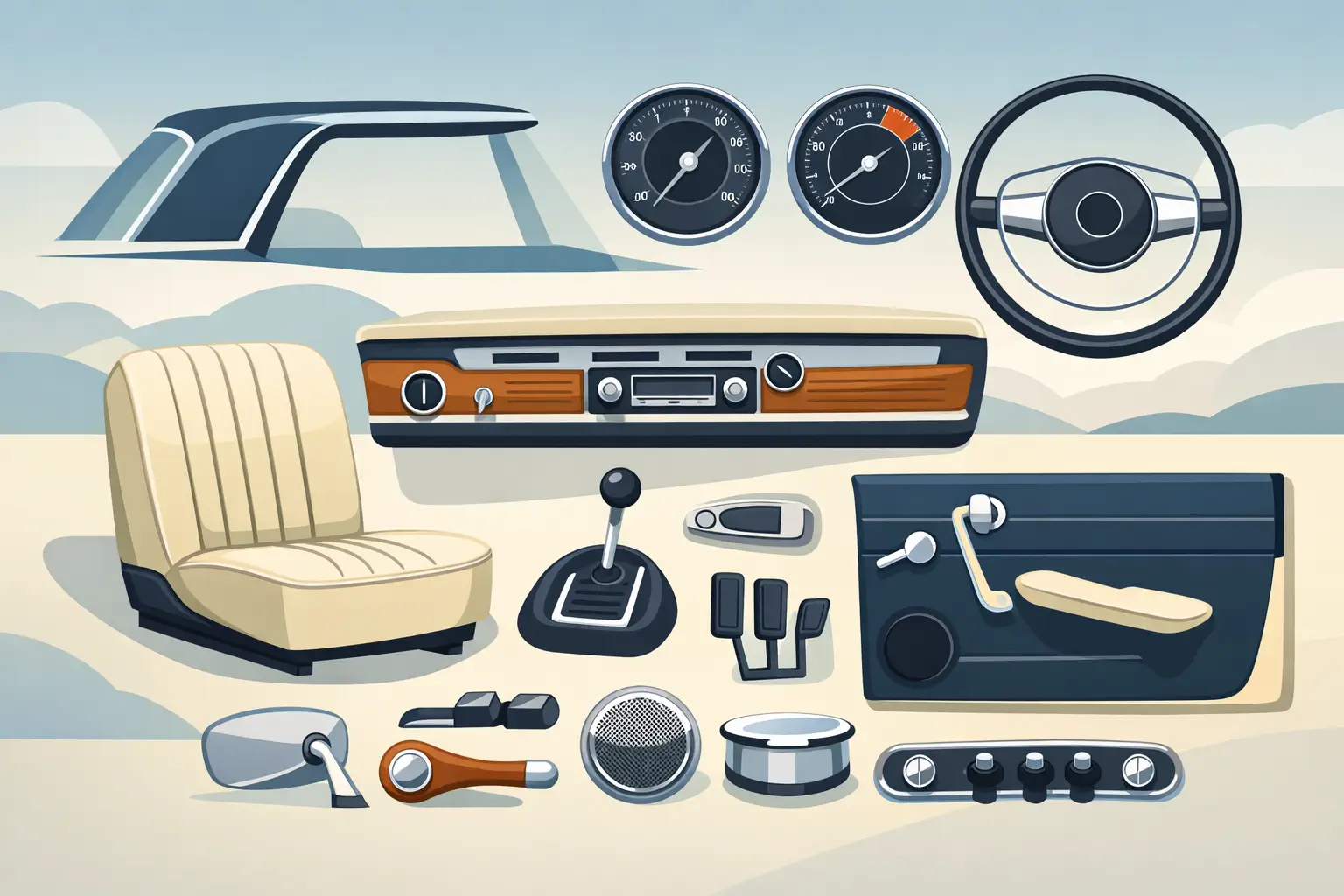
The interior category on a Pagoda is broader than many buyers expect. It includes obvious trim pieces such as seat covers, carpet sets, door panels, dash pads, console trim, wood pieces, and interior handles. It also covers the details that make the car feel complete, including sun visors, mirror components, shift boots, pedal rubbers, interior light lenses, heater levers, switch bezels, escutcheons, fasteners, and weatherstripping that affects noise and cabin finish.
On a W113, small parts carry more weight than they do on newer cars. The cabin is simple, visible, and close to hand. If the door pocket trim is wrong, if the carpet binding looks off, or if the chrome seat hardware does not match the rest of the interior, it stands out immediately. Buyers who know these cars notice it. So do appraisers and restoration shops.
Choosing W113 Pagoda interior parts by restoration goal
The right parts strategy depends on the car. A mostly original 280SL with honest patina may benefit from selective replacement – items like seat pads, rubber seals, floor insulation, or cracked plastic trim that improves use without erasing character. A car headed for show judging requires a more exacting standard, especially on upholstery grain, carpet weave, hard trim finish, and hardware style.
That is where many projects get expensive. Owners often buy broad interior kits before checking what can be saved. Original wood may be restorable. Factory seat frames may only need springs, pads, and correct covers. Even interior chrome can sometimes be refinished instead of replaced. On the other hand, sun-baked dash components, warped panels, and brittle plastics rarely improve with wishful thinking.
The practical approach is to inspect the cabin as a system. Seats, door panels, carpets, dash trim, center console, and weather seals all interact. Replacing one section with fresh materials can make the surrounding worn parts look worse. Sometimes that is acceptable on a driver. Sometimes it means the job should be done in stages with a clear plan.
Fitment matters more than generic replacement
Pagoda owners already know that chassis code alone is not always enough. W113 production changes, engine variants, transmission type, and trim combinations can affect what fits and what looks right. That is especially true with interior soft goods and finish items.
A carpet set may be marketed for all W113 cars, but details such as edge binding, underlay thickness, and cut around pedals or console pieces can vary in quality. Seat upholstery is even less forgiving. Poorly patterned covers create loose pleats, distorted bolsters, or incorrect seams that change the whole cabin. The same goes for door panels that use the wrong board material or mounting points.
Hard parts can be just as tricky. Switches, knobs, bezels, wood trim, vent pieces, and interior handles need the correct profile and finish. A part that is technically installable may still be visibly wrong. For a chassis as collectible as the W113, close enough is often not close enough.
High-priority interior parts that usually need attention
Most Pagoda interior projects start with the same wear areas. Seats are first because they affect both appearance and comfort. Seat covers, horsehair or foam padding, diaphragms, springs, and hinge trim all age differently, and replacing only the outer cover can leave the seat feeling tired.
Carpets are another common need. Moisture intrusion, fading, and old repairs leave many W113 floors looking uneven. If you are replacing carpets, it makes sense to inspect insulation, floor plugs, and underlayment at the same time. A clean carpet install over damp or deteriorated material is not money well spent.
Door panels and interior wood often follow. Door cards can warp, split, or pull loose around attachment points. Wood trim suffers from sun, old varnish failure, and cracking around edges. Good replacement or restoration work here changes the entire impression of the cabin.
Then there are the finishing parts – shift surround trim, heater control details, dash knobs, escutcheons, armrest hardware, grab handles, mirror pieces, and interior lenses. These are smaller-ticket items individually, but they are often what separates a clean restoration from a car that still looks unfinished.
Original style versus upgraded usability
Not every owner wants the same result. Some buyers are preserving a numbers-conscious 230SL or 250SL and want period-correct materials as close to factory presentation as possible. Others want a comfortable 280SL driver with a cleaner, tighter interior that holds up well in regular use.
There is room for both approaches, but the trade-off should be deliberate. OEM-style upholstery and trim generally preserve authenticity and resale confidence. More modern materials may wear better or cost less, but they can shift the character of the cabin. The same goes for sound insulation, seat foam density, and carpet construction. Better on paper does not always mean better for the car.
If future value matters, authenticity usually wins. If the car is being built for frequent road use, some selective upgrades can make sense, especially where they are not visually obvious. The key is consistency. A W113 interior should still feel like a W113 interior when the work is done.
How to buy W113 Pagoda interior parts without wasting money
The fastest way to lose time on a Pagoda restoration is ordering parts before documenting what is in the car. Start by verifying model and year, then inspect the cabin piece by piece. Photograph hardware, trim orientation, stitch patterns, panel shapes, and color breaks before disassembly. Small reference details matter later.
Next, separate the parts into three groups: reusable, restorable, and replace-only. That sounds basic, but it keeps budgets under control. Original metal trim, seat frames, wood cores, and some hardware are often worth saving. Consumables like seals, pads, clips, faded plastic, and brittle rubber usually are not.
When buying replacements, focus on model-correct fitment, material quality, and finish accuracy rather than shopping by price alone. Cheap interior parts cost more when they require rework, trimming, or replacement after installation. For high-visibility components such as door panels, seat covers, carpet, and wood trim, quality is obvious the minute the car is reassembled.
This is also where a specialist source matters. A catalog built around classic Mercedes applications is far more useful than a general aftermarket listing with loose cross-reference data. Buyers looking for W113-specific interior pieces benefit from clear category organization and product naming that reflects actual chassis knowledge, not broad-fit assumptions. Mercedes Parts Zone serves that need for owners who want enthusiast-grade components without sorting through irrelevant inventory.
Common mistakes with Pagoda interiors
The most common mistake is mixing restoration levels. Fresh upholstery next to worn chrome, aged carpet, and faded dash components creates a half-finished look. The second mistake is replacing visible trim while ignoring the support parts underneath, such as seat padding, panel clips, insulation, or seals.
Another issue is color mismatch. Pagoda interiors are unforgiving when vinyl, leather, carpet, and painted surfaces are sourced at different times without checking tone and finish. Even when parts are individually correct, the overall cabin can look off if the materials do not agree.
Finally, many owners underestimate hardware. Missing clips, incorrect screws, damaged backing plates, and worn mounting points create rattles, poor fit, and stress on new trim. Interior restoration is not just about the visible surfaces. The hidden attachment pieces are what make the visible parts sit correctly.
Building a parts list that works
A good W113 interior order starts with the major assemblies, then fills in the supporting details. Seats, carpets, door panels, dash trim, wood, seals, and console items should be mapped first. After that, add the smaller pieces that are easy to overlook during reassembly – escutcheons, bezels, fasteners, seat hardware covers, pedal rubbers, light lenses, and trim clips.
That approach keeps the project moving and reduces repeat orders. More importantly, it helps prevent the familiar situation where a nearly finished Pagoda sits waiting on one small interior piece that should have been ordered from the start.
The right interior parts do more than make the car presentable. They restore the feel Mercedes engineered into the W113 in the first place – solid switch action, proper panel fit, correct seat support, and the clean, restrained finish that defines the Pagoda. Buy carefully, match the parts to the level of the car, and the cabin will reward you every time the door closes.