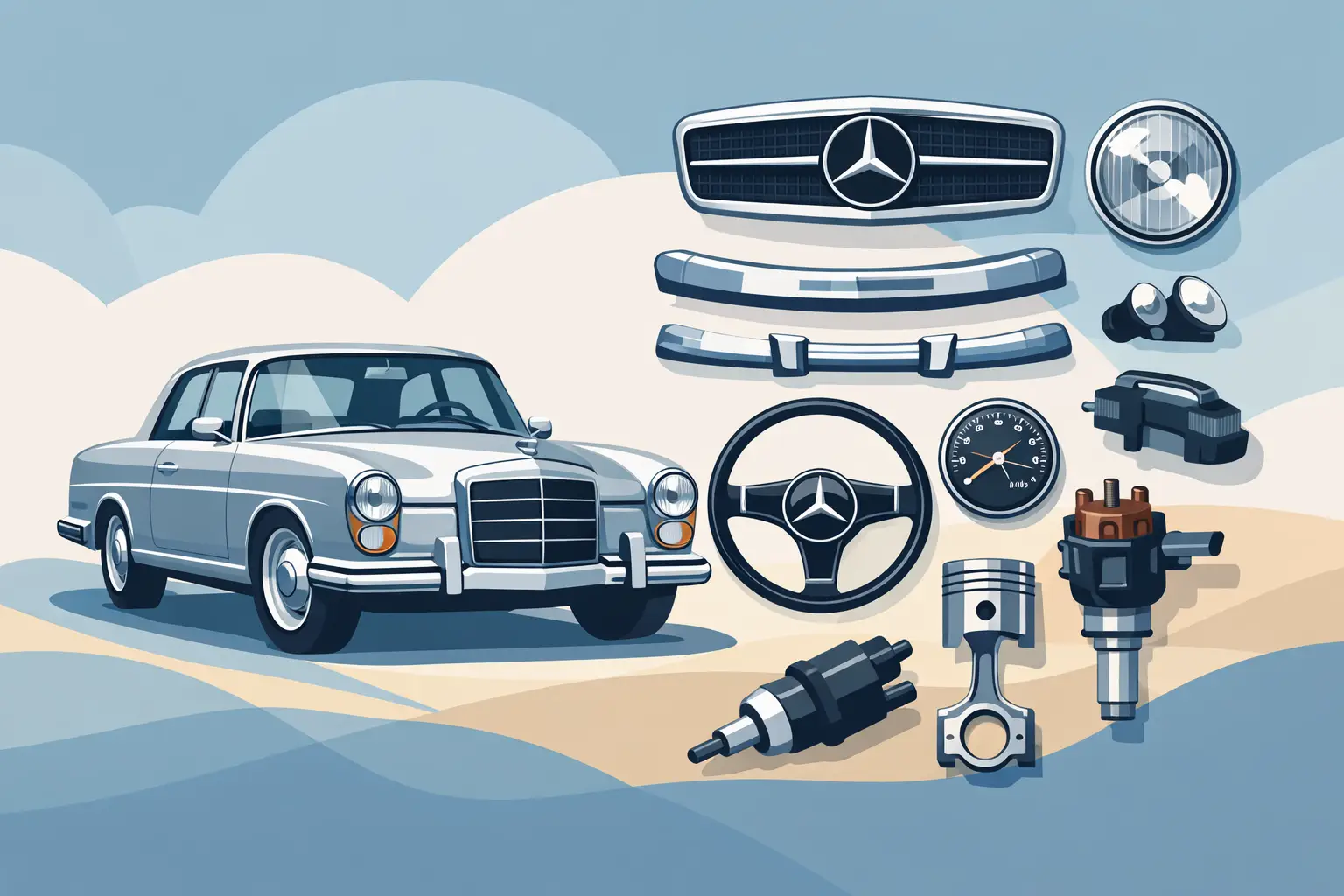
A W113 with the wrong taillight seal, a W107 with generic front-end parts, or a W124 wearing poorly matched interior trim all show the same problem fast – the car may still run, but it no longer feels correct. That is why classic mercedes parts are not just replacement items. For serious owners, they are the difference between a car that is merely repaired and one that still presents, drives, and ages like a proper Mercedes-Benz.
Why classic Mercedes parts need to be model-specific
Classic Mercedes ownership rewards precision. Chassis families that look similar at a glance often use different mounting points, finishes, electrical connectors, hardware sizes, and trim profiles. A part listed too broadly as fitting an “old Mercedes” is usually where delays, returns, and poor results begin.
For buyers working on a W111 coupe, R107 SL, W201 190E, or R129 SL, model-correct fitment matters for more than convenience. It affects panel alignment, ride quality, electrical reliability, and resale credibility. Even straightforward service items like brake components, fuel system parts, or suspension bushings can vary within a chassis based on production year, engine, and market configuration.
This is also where specialist inventory matters. A focused supplier understands the difference between parts that technically install and parts that belong on the car. For collectors and restoration-minded owners, that distinction is the entire point.
The categories that matter most when sourcing classic Mercedes parts
High-intent buyers usually shop by system, not by broad theme. They are solving a specific issue – brake fade on an R107, cracked wood trim in a W124, tired steering response in a W201, or missing exterior brightwork on a Pagoda. The right catalog should reflect that behavior.
Engine and fuel system components
Engine parts are often the first place corners get expensive. Gaskets, ignition parts, filters, hoses, mounts, cooling components, and fuel delivery items all affect drivability, especially on cars that sit for long periods. On older Mercedes platforms, vacuum integrity and heat management matter as much as the major hard parts.
Fuel system sourcing deserves extra care. Original-style pumps, injectors, accumulators, seals, and related components can make the difference between a car that starts cleanly and one that develops hard-hot-start issues or unstable idle. On mechanical and early electronic injection cars, mismatched parts quickly create diagnostic confusion.
Brakes, suspension, and steering
These cars were engineered to feel composed, not vague. When owners complain that a classic Mercedes has become loose, harsh, or unsettled at highway speed, the root cause is often cumulative wear in bushings, tie rods, steering components, shocks, and braking hardware.
Correct brake parts restore more than stopping power. They bring back pedal feel and predictable response. Suspension and steering parts do the same for road manners. A W124 or W201 with quality, chassis-correct components should feel tight and deliberate, not floaty or improvised. That is particularly important for enthusiast cars that are driven regularly rather than stored.
Electrical, lighting, and switches
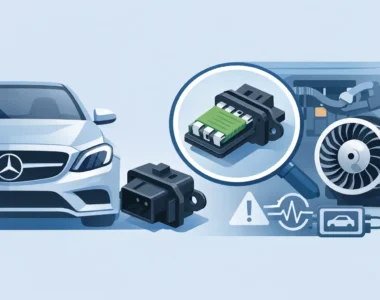
Electrical problems on classic Mercedes models are rarely glamorous, but they are constant purchase drivers. Tail lamp assemblies, headlight components, relays, window switches, instrument lighting parts, and wiring-related items all fall into the category of small parts that can stall an otherwise complete restoration.
Lighting is one area where buyers should be especially selective. Lens quality, housing fit, seal design, and connector style all matter. Poorly made replacements can introduce condensation, uneven fitment, or a visibly incorrect appearance. On collector-grade cars, that is hard to ignore.
Interior and exterior trim
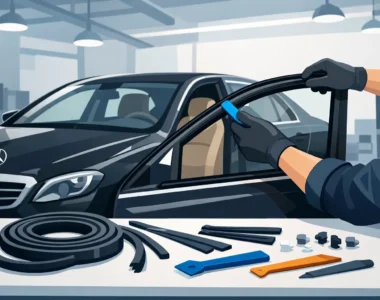
Trim is where authenticity becomes visible from ten feet away. Seat components, dash wood, shift knobs, seals, moldings, emblems, grilles, bumpers, and weatherstripping all influence whether a car looks coherent or pieced together.
Exterior trim can also be harder to source than mechanical service parts, especially for lower-production or highly optioned vehicles. Buyers restoring a W111, W113, or specialty W201 variant usually know this already. When the correct piece appears, hesitation can mean waiting months to find another one.
What serious buyers should check before ordering
The best classic Mercedes parts purchase often starts with verification, not urgency. Even experienced owners can get caught by mid-cycle revisions, engine-specific differences, or incomplete prior repairs done by previous owners.
Start with the chassis code and narrow from there. Production year helps, but it is not enough on its own. Engine type, body style, trim level, and market specification all affect compatibility. A supplier that organizes inventory around real Mercedes applications, not generic aftermarket groupings, saves time and reduces costly guesswork.
Photos matter too. If the listing shows mounting points, finish details, connector style, or hardware design, that is useful information, not decoration. Buyers comparing exterior lighting, interior trim, wheels, or body components should look closely at these details before purchase.
Condition and purpose should guide the decision between a serviceable driver-grade replacement and a higher-end restoration-grade part. Not every car needs concours-level inventory. A regularly driven R129 may need dependable suspension and electrical components first, while a W113 restoration may justify a premium on trim, brightwork, and rare interior pieces. It depends on the build and the ownership goal.
Hard-to-find parts are where specialist suppliers earn trust
Anyone can list common filters or brake pads. The real test is whether a supplier can support the difficult side of classic Mercedes ownership – body kits, specialty wheels, model-specific hardtops, rare trim, replacement engines, and parts for enthusiast platforms that mainstream auto parts catalogs barely recognize.
That is where a specialist operation stands apart. Buyers working on a W107, W113, W124, W201 Cosworth, R129, or W111 are usually not looking for universal solutions. They want inventory that respects the car’s original engineering and the realities of restoration work. Mercedes Parts Zone fits that expectation by focusing on classic Mercedes applications rather than spreading across unrelated brands and generic inventory.
For online buyers, that focus matters because it shortens the path from search to cart. When the catalog is organized around the vehicles people actually own and restore, shoppers can move directly into the right category – engine parts, lighting, interior, suspension, exterior, wheels – instead of sorting through pages of irrelevant fitments.
Buying for authenticity versus buying for use
Not every purchase is about originality in the same way. Some owners want strict period-correct presentation. Others want a reliable weekend driver with cleaner cosmetics and sharper road behavior. Both are valid, but the parts choices are not identical.
For authenticity-first cars, finish, shape, hardware style, and known model correctness carry real weight. Slight deviations in trim profile, lens pattern, or interior material can undercut a high-quality restoration. For driver-focused cars, durability and proper fit may matter more than absolute factory-level detail, especially in wear items.
The key is to be honest about the project before buying. Overspending on cosmetic perfection while ignoring tired steering or compromised fuel delivery usually creates frustration. The better approach is to prioritize what the car needs now, then build toward the final standard you want.
Why catalog structure matters for classic Mercedes owners
A good storefront does more than display parts. It helps knowledgeable buyers identify exactly what belongs on a specific chassis without wasting time. That means clear categories, recognizable product naming, visible pricing, and inventory that reflects how these cars are actually maintained.
Classic Mercedes customers do not browse like casual retail shoppers. They arrive looking for a headlamp assembly for an R107, a suspension component for a W124, a wheel set for a W201, or an interior replacement item for a W111. Category-led navigation and featured products are not just merchandising tools. They support faster decisions for people who already know the platform and are trying to keep momentum on a build or repair.
Sale pricing and featured inventory also matter more than many brands admit. Some specialty parts are rare enough that availability alone drives the sale. Others are routine enough that a visible deal can push a buyer to complete the order now instead of waiting.
The right part on a classic Mercedes always feels obvious once it is installed. Panel gaps settle correctly, switches operate as they should, the suspension regains its composure, and the car starts behaving like the chassis Mercedes intended. That is the standard worth buying for, whether you are refreshing a driver or chasing the final details on a full restoration.