
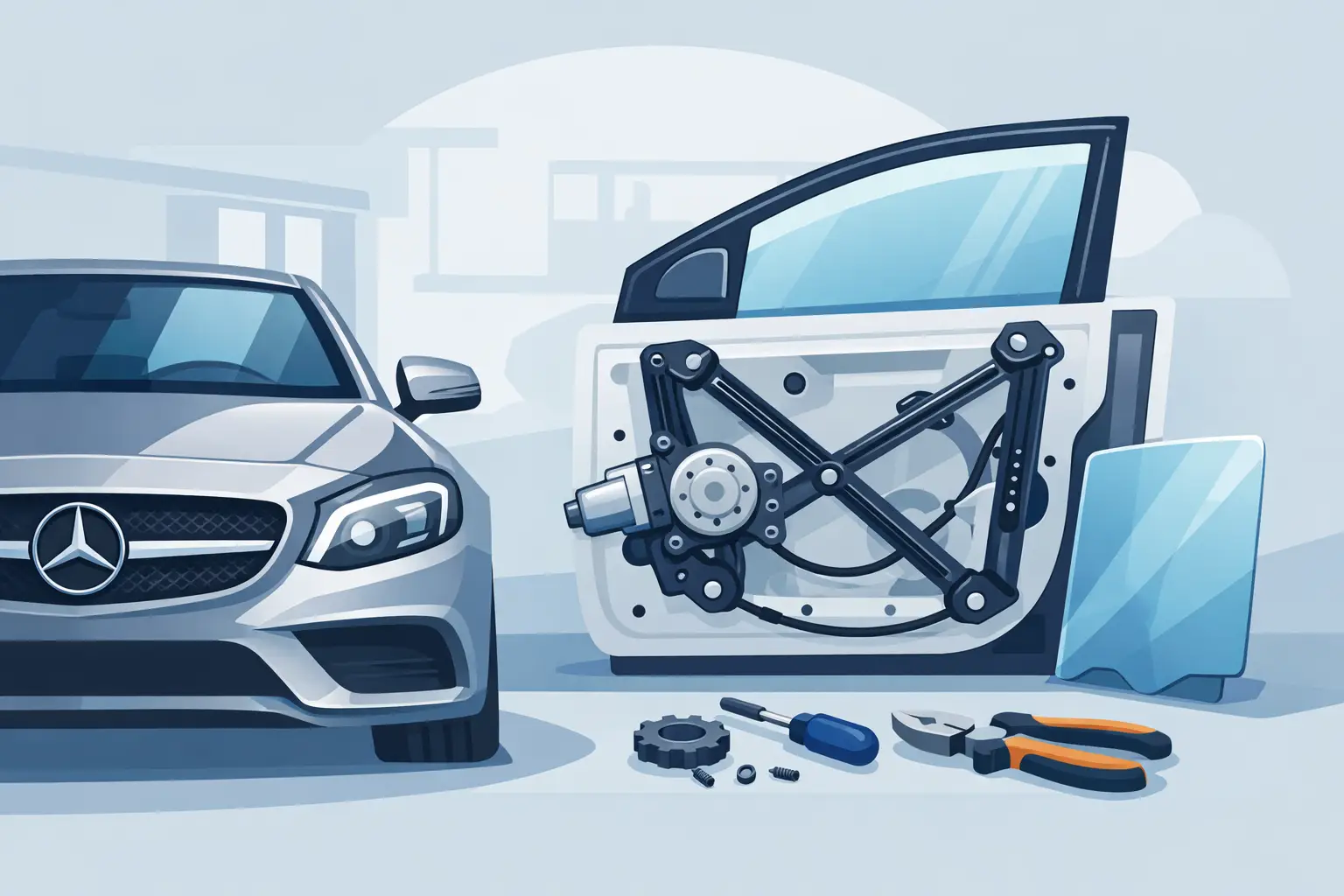
A slow side window on a W124 coupe or an R107 SL that drops crooked is rarely just an annoyance. In most cases, it is the start of a regulator failure that can strain the motor, damage guides, or leave the glass stuck down when the weather turns. Mercedes window regulator repair is one of those jobs where correct diagnosis matters more than speed, especially on classic chassis where fitment, glass alignment, and hardware condition all affect the result.
What usually fails in a classic Mercedes window regulator
On older Mercedes-Benz models, the regulator itself is only part of the story. The common failure points include worn scissor pivots, cracked plastic guide pieces, stretched or frayed cables on cable-driven systems, weak tension springs, and mounting points that have loosened over time. In some cases the regulator is sound, but hardened window channels create enough drag to make the mechanism look bad.
That distinction matters. A regulator that binds because the felt channels have dried out needs a different fix than one with a broken slider or bent arm. Owners working on W201, W124, R129, and later classic-era cars often see cable and guide wear, while earlier chassis may present more scissor-mechanism fatigue and pivot play. The symptom can look identical from the driver seat, but the parts strategy is different.
If the glass tilts forward or rearward as it moves, inspect the guide jaws, channels, and regulator mounting points before assuming the motor is at fault. If the motor runs but the glass does not move, suspect stripped drive components, a detached glass carrier, or a failed cable drum. If movement is slow in one direction only, resistance in the tracks or a regulator binding under load is more likely than a completely failed motor.
Signs you need mercedes window regulator repair
The obvious sign is a window that stops working, but most regulators give warning before they quit. A clicking door, popping noise during travel, glass that moves in jerks, or a window that needs help by hand usually means the mechanism is near the end of its service life. On pillarless coupes and cabriolets, poor window drop or rise can also affect door closing and seal contact.
Classic Mercedes owners should take these symptoms seriously because continued operation can turn a regulator job into a larger door repair. A loose glass carrier can chip glass. A dragging mechanism can overload the switch and motor. A skewed window can damage weatherstrips that are far more expensive and difficult to replace correctly than the regulator itself.
There is also the fitment issue. Many older Mercedes doors are tightly packaged, and once a regulator bends or breaks, it can mark the inside of the door shell, interfere with vapor barriers, or knock guide rails out of position. Fixing it early usually preserves more original hardware.
Repair or replace – what makes sense
Mercedes window regulator repair is not always a full regulator replacement. If the frame geometry is straight and the main mechanism is not excessively worn, rebuilding with model-correct sliders, clips, bushings, or cable service parts can be the right approach. This is especially true on harder-to-source regulators for lower-volume classic applications.
That said, there is a point where rebuilding stops making economic sense. If the arms are bent, pivot holes are elongated, the cable drum is damaged, or corrosion has compromised the structure, replacing the complete assembly is usually the better call. The labor to access the regulator is substantial enough that repeating the job because one worn component was left behind is rarely worth it.
For restoration-minded owners, the decision often comes down to originality versus reliability. An original regulator can sometimes be retained if the wear is limited to serviceable components. But on a driver-quality car where dependable operation matters most, a complete replacement assembly may be the better value.
Model-specific fitment matters more than many buyers expect
Not all regulators are interchangeable even within the same chassis family. Door configuration, production date, body style, left or right side, and whether the car is a sedan, coupe, wagon, hardtop, or roadster can all change the part. A W124 sedan front regulator is not the same problem as a W124 coupe quarter or door glass mechanism. R107 regulators can also vary by year and door setup.
This is where buyers get into trouble with generic catalog listings. A part described broadly as fitting a model range may still differ at the mounting plate, motor attachment, guide length, or glass connection points. On a classic Mercedes, close is not good enough. If the regulator geometry is off, the glass will not track correctly, and the result is wind noise, poor seal compression, or repeated failure.
When sourcing parts, confirm chassis code, body style, side, and production details before ordering. If your original regulator has a specific mounting design or motor coupling, match it directly. Serious restorers already know this, but it is worth repeating because window hardware is one area where minor fitment errors become major installation headaches.
The motor is not always guilty
Window motors get blamed for many problems they did not create. A healthy motor can sound weak if the regulator is dragging, and a failing regulator can pull enough current to make the electrical side look suspect. Before replacing a motor, verify the mechanism moves freely with the glass supported and the regulator disconnected where possible.
Switches and wiring also deserve attention. On some classic Mercedes models, aged switch contacts or voltage drop through the circuit will mimic regulator trouble. If the opposite side window moves noticeably faster, compare electrical performance before condemning the regulator alone. But if the mechanism is noisy, visibly loose, or uneven under motion, the mechanical side still needs inspection.
The best repair is often comprehensive. A new regulator installed into dry channels with a tired motor and loose glass guides may work at first, then disappoint quickly. Door internals should be treated as a system.
Parts to inspect while the door is open
If you are already inside the door, inspect the guide channels, vapor barrier, glass mounts, anti-rattle pieces, stops, and fastening hardware. Many repeat window complaints trace back to secondary components that were left untouched during a regulator replacement. A fresh regulator cannot compensate for brittle guides or deteriorated channel lining.
This is especially relevant for collector-grade cars where door shut quality and window seal alignment matter. On frameless or semi-frameless setups, even slight misalignment shows up immediately at the roof seal. On sedans, it can show up as slow travel, wind noise, or a poor rear edge seal.
For buyers sourcing parts, it often makes sense to purchase the regulator job as a package rather than a single line item. The correct clips, sliders, mounts, and related hardware can save time and prevent a second teardown. Mercedes Parts Zone serves exactly this kind of demand – model-specific classic Mercedes components for owners who would rather fix the system correctly the first time.
What makes a quality replacement regulator
The right regulator should match original mounting geometry, glass attachment style, travel range, and motor interface. Material quality matters too. Cheap reproductions may install, but weak rivets, poor cable tensioning, rough guide surfaces, or incorrect spring rates tend to show up quickly in use.
For classic Mercedes applications, product selection should favor correctness first. A regulator that fits without modification and maintains proper window alignment is more valuable than a lower-priced unit that needs rework. This is one area where enthusiast-grade, vehicle-specific inventory is worth the extra attention.
If you are rebuilding instead of replacing, the same rule applies to repair components. Sliders, clips, rollers, and bushings need to match the original system. A generic substitute may seem close enough on the bench and still create binding once the glass is under load.
Installation realities for classic Mercedes owners
Even experienced DIY owners know this job can shift from straightforward to tedious fast. Access holes are limited, glass must be supported correctly, and alignment adjustments often take patience. On older doors, brittle trim clips, moisture barriers, and aged insulation add risk during disassembly.
The real challenge is not bolting in the regulator. It is setting the glass so it moves smoothly, seals evenly, and does not strain the mechanism at the top of travel. That is why part correctness matters so much. If the regulator is right, adjustment is usually manageable. If the regulator is wrong, adjustment becomes a chase with no clean finish.
For shops working on vintage Mercedes, customer expectations are also different. Owners are not just asking for the window to go up and down. They want correct travel, proper seal contact, quiet operation, and no compromise to original trim or hardware. The repair standard is higher, and the parts choice should reflect that.
Buying the right part the first time
For mercedes window regulator repair, the safest path is to buy by exact application, not broad model family. Confirm the chassis code, body style, side, and any production split. Compare motor mount style and glass attachment details with the original unit. If the car has had prior door work, verify that the existing mechanism is actually correct for the chassis before ordering a replacement to match it.
This is especially important on restored or modified cars, where a previous repair may have introduced mixed hardware. Matching the wrong existing part only repeats the problem. Authenticity-minded owners should also consider whether they want a complete regulator, a rebuild path, or supporting hardware to restore factory-like operation.
A stuck or crooked window is easy to postpone until the day it will not close. On a classic Mercedes, that delay usually costs more in trim wear, motor strain, and weather exposure than the correct repair would have in the first place. Start with fitment, inspect the full system, and choose parts the way these cars deserve – by chassis, by function, and by long-term correctness.



1 Comment