A soft pedal on a W124 usually starts as a small annoyance and turns into a parts hunt fast. If you are shopping for w124 brake parts, the real challenge is not finding generic replacements – it is finding the right parts for your exact chassis, engine, and brake setup so the car stops the way Mercedes intended.
The W124 range covers a lot of ground. A 260E, 300E, 300D, E320, 400E, and 500E do not all share the same brake package, and even within the same model year there can be production splits that affect rotor size, pad shape, sensor style, and caliper fitment. That is why informed buyers usually start with the chassis details first and the product listing second.
Why w124 brake parts need chassis-specific matching
On a classic Mercedes, brake service is never just about replacing worn pads. Rotor diameter, vented versus solid construction, front and rear axle variations, pad wear sensor compatibility, and hardware differences all matter. With the W124 platform, those differences become more pronounced once you move beyond the common six-cylinder sedans and start looking at diesel models, wagons, coupes, cabriolets, and V8 applications.
For US owners, this matters because many mainstream parts catalogs flatten the W124 into one broad fitment group. That may be good enough for a quick search, but it is not good enough for a collector, restoration buyer, or independent shop trying to avoid returns and downtime. Correct fitment protects more than convenience. It protects pedal feel, braking balance, wheel clearance, and the overall integrity of the repair.
The core W124 brake parts most buyers need
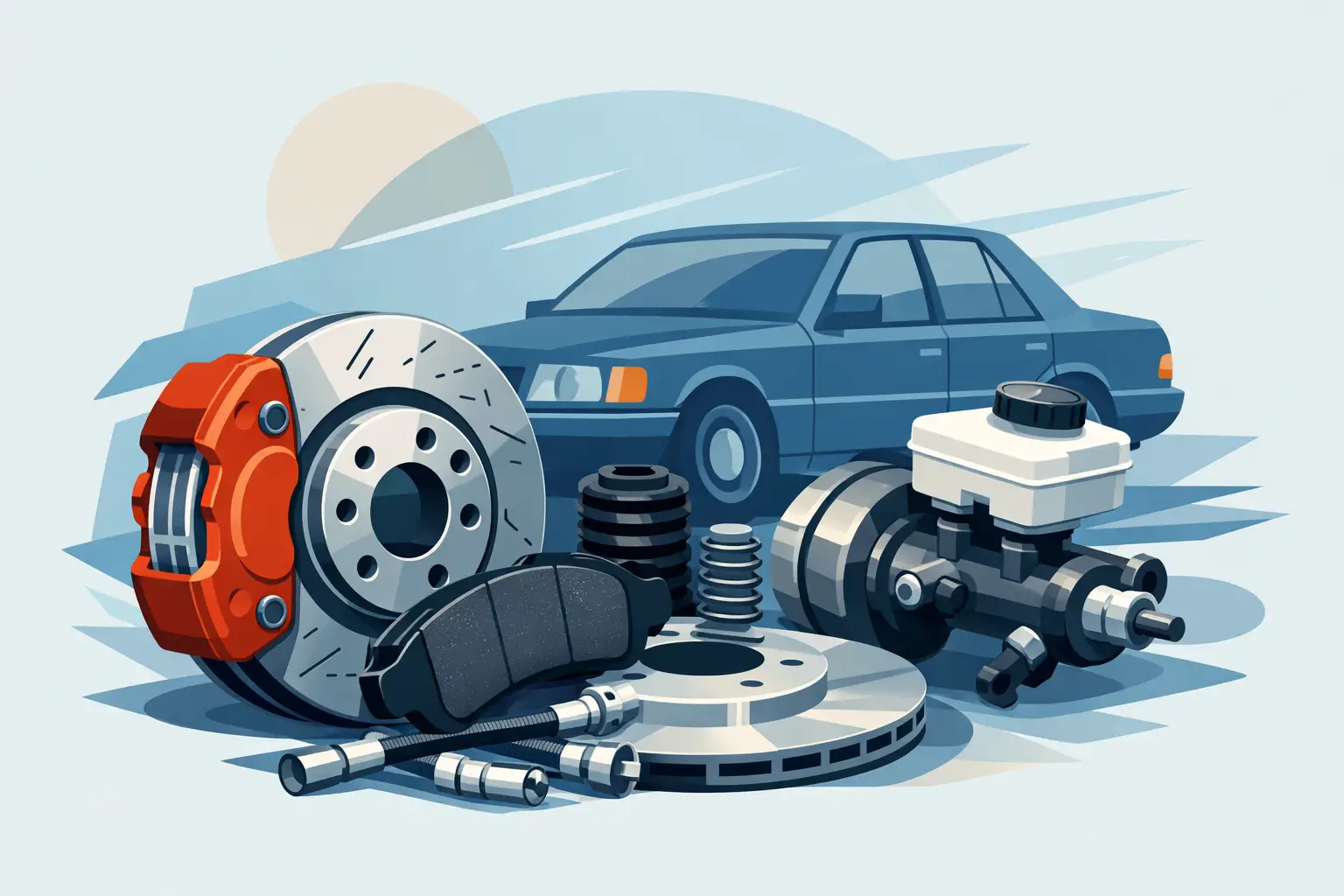
Most brake jobs on the W124 begin with the normal wear items. Front and rear brake pads, front and rear rotors, wear sensors, anti-rattle clips, guide pins, and brake hardware are the common starting point. If the car has been sitting, or if there is uneven pad wear, the order often expands to include remanufactured or replacement calipers, brake hoses, and sometimes backing plates or parking brake components at the rear.
Brake hoses are easy to overlook, but on a W124 they can be just as important as pads and rotors. An aging hose can swell internally and create a dragging brake or inconsistent release. The symptom may look like a caliper issue when the hose is actually the restriction. On higher-mileage cars, replacing hoses during a full brake refresh is often the cleaner long-term move.
Fluid service belongs in the same conversation. Even the best hard parts will not correct old contaminated fluid or air trapped in the system. If the pedal still feels wrong after replacing friction components, the next question is usually hydraulic condition, not pad brand.
Rotors, pads, and hardware
For most owners, rotor and pad selection comes down to intended use. A stock street-driven 300E benefits from quality OE-style components that deliver quiet operation, stable bite, and predictable wear. A heavier wagon or a V8 car may justify stepping up to premium friction material and carefully matched rotors, especially if the car sees highway use, summer heat, or full passenger loads.
Hardware should not be treated as an afterthought. Old retaining springs, rusty pins, and fatigued clips can cause noise, uneven wear, and poor pad movement. When the brake system is already apart, fresh hardware is a practical decision rather than an optional extra.
Calipers, hoses, and hydraulic wear items
Calipers on a W124 can last a long time, but age catches up with seals, pistons, and slide surfaces. A sticking caliper often shows up as one hot wheel, one dirty wheel, or a car that pulls under braking. If one side has failed badly, many restorers and professional installers prefer replacing calipers in axle pairs to keep braking response even side to side.
Master cylinder and reservoir-related issues are less common than pad and rotor wear, but they should not be ignored on cars that have sat for extended periods. If the pedal sinks, the fluid is dark, or there is evidence of leakage at the booster area, expanding the repair may save repeating the labor.
How to identify the right W124 brake setup
The quickest path to the right parts is VIN-based verification combined with known chassis details. Engine, model year, body style, and market specification all help narrow the selection, but the VIN is what reduces guesswork. A W124 sedan from the early years can differ meaningfully from a later E-Class badged car, and performance-oriented models sit in their own category entirely.
Wheel size can also affect what owners think they need. Larger brakes are sometimes associated with upgraded wheels, but assumptions create mistakes. It is better to confirm original equipment specifications than to order based on what is currently mounted on the car, especially if the vehicle has changed hands multiple times.
If the car is a 400E or 500E, or if it has had prior brake conversions, scrutiny matters even more. Those are not the cars where generic catalog fitment should be trusted without checking dimensions and caliper type.
Buying w124 brake parts for restoration vs. daily use
Not every W124 is being restored to factory presentation. Some are clean drivers that need dependable stopping power, while others are preservation-grade cars where model-correct appearance and OE-style braking feel carry more value than chasing aggressive friction compounds.
For a restoration-minded buyer, authenticity usually means selecting parts that match original dimensions, finish, and fitment as closely as possible. That includes rotor configuration, pad profile, sensor compatibility, and hardware style. The goal is not just that the parts bolt on. The goal is that the braking system looks and performs like a proper W124 system should.
For a driver-focused car, durability and availability may matter more. A quality street pad with low dust and stable cold performance can be the better choice than a more aggressive option that adds noise or rotor wear. It depends on the car’s role. A weekend 300CE and a high-mile E320 commuter do not need to be treated the same way.
Common mistakes when ordering W124 brake components
The biggest mistake is assuming all W124 brake parts interchange. They do not. Front and rear axle parts can vary by engine and trim, and the higher-spec cars can be significantly different from the standard six-cylinder sedans.
The second mistake is replacing only the obvious wear item and ignoring the surrounding system. Pads on scored rotors, new calipers on old hoses, or fresh friction components with stale fluid often lead to disappointing results. The car may stop better than before, but not as well as it should.
The third mistake is shopping by price alone. On a classic Mercedes, low-cost brake parts can create noise, poor fit, inconsistent wear, and extra labor. For owners who value the chassis, the cost of doing the job twice is usually higher than choosing correct, enthusiast-grade components the first time.
What serious buyers should look for in a supplier
A good W124 parts source does more than list brake pads and rotors under a generic year range. It should organize inventory around real Mercedes applications and provide enough product detail to separate standard models from heavier-duty or performance variants. Clear naming, category structure, and fitment awareness save time before the cart ever fills up.
That is why specialists tend to stand apart from broad-line parts sites. If the catalog understands classic Mercedes chassis codes, buyers can move faster and with fewer assumptions. For W124 owners balancing authenticity, drivability, and correct fitment, that matters as much as the product itself. Mercedes Parts Zone is built around that kind of model-specific search behavior, which is exactly what this chassis demands.
When a full brake refresh makes more sense
If the car has unknown service history, uneven braking, vibration, sticking calipers, or visible age across the system, a full refresh is often the better value. Replacing pads, rotors, sensors, hoses, fluid, and any suspect calipers at one time creates a known baseline. It also helps avoid the familiar cycle of fixing one weak point only to expose the next one a month later.
That approach is especially sensible on newly acquired W124 cars. Many have been maintained intermittently, parked for long stretches, or serviced with mixed-brand parts over the years. Starting fresh with correctly matched components gives the chassis a proper foundation and restores the confidence these cars are known for.
The right brake parts do more than stop the car. They preserve the character of the W124 – solid pedal feel, stable braking at speed, and the kind of confidence that makes an old Mercedes feel properly sorted again.