A mercedes amg style body kit can sharpen the look of a classic Mercedes fast, but on older chassis, the difference between a clean upgrade and a frustrating parts pile usually comes down to fitment, material quality, and model correctness. That matters even more on enthusiast platforms like the W124, W201, R129, and R107, where body lines are well known and buyers can spot an ill-fitting bumper or mismatched cladding immediately.
What a mercedes amg style body kit actually means
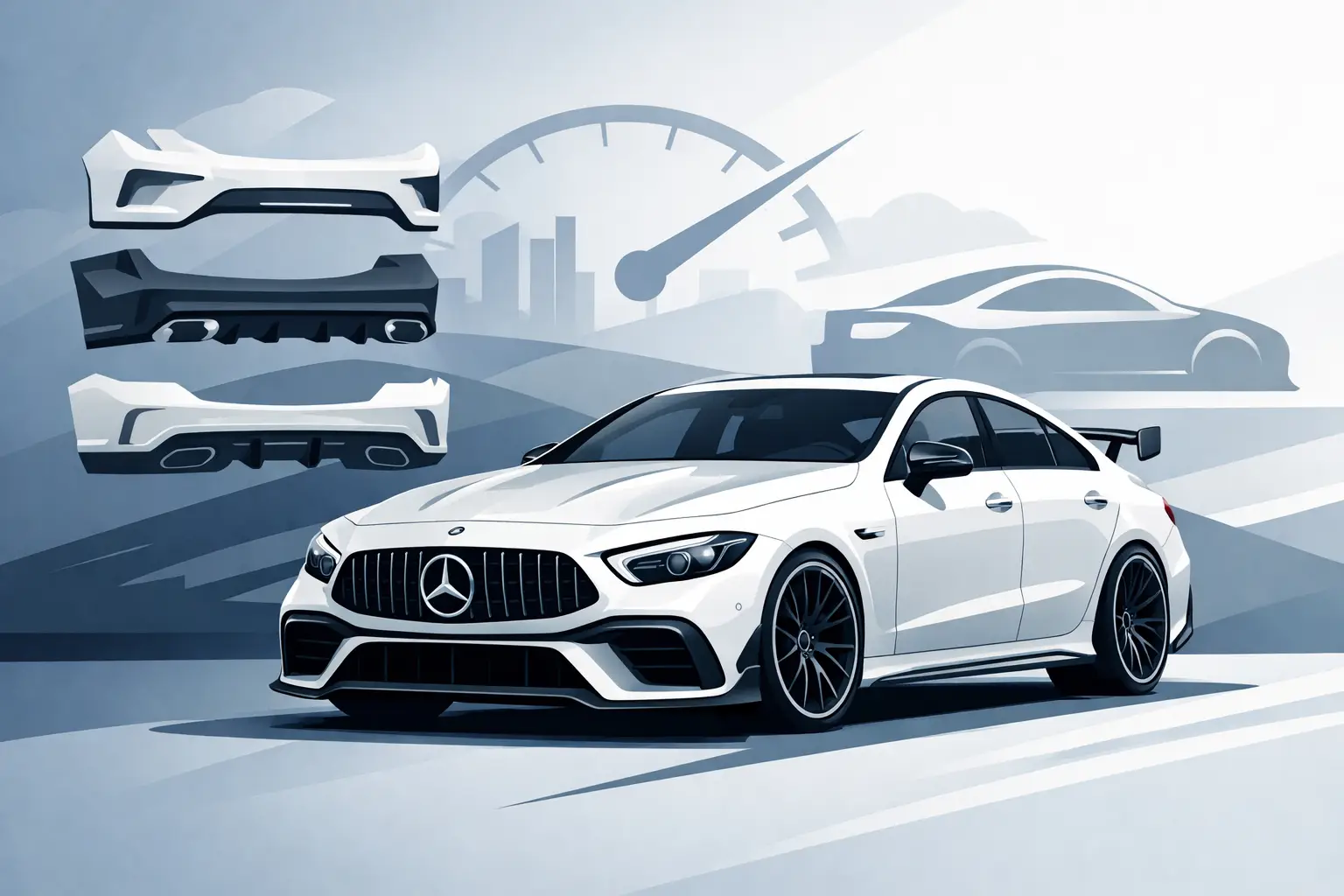
For most classic Mercedes applications, AMG style does not automatically mean original AMG, period-correct AMG, or factory-authorized AMG equipment. It usually means a body package designed around AMG visual cues – deeper front and rear valances, side skirts, lower-profile bumper styling, and in some cases trunk spoilers or wider arch treatment.
That distinction matters. If you are restoring a collector-grade car, an AMG style kit may not be the right move at all. If you are building a clean driver, a period-inspired tribute, or a more aggressive street car, it can be a very good fit. The right choice depends on whether your priority is originality, appearance, resale positioning, or a balance of all three.
On classic Mercedes models, the best AMG-style upgrades tend to work because the underlying design language is already restrained. A good kit should look like it belongs on the chassis. If the bumper profile is too bulky, the side skirts sit too low, or the shapes ignore the original beltline and lower cladding, the car starts to lose the Mercedes character that made it attractive in the first place.
Which chassis respond best to AMG-style kits
Not every classic Mercedes platform wears extra bodywork equally well. Some cars have strong aftermarket support and established period-correct styling references. Others are much less forgiving.
W124
The W124 is one of the safest places to install a mercedes amg style body kit. The chassis already suits deeper lower aero parts, especially on coupes and sedans with sport suspension and correct wheel fitment. The car has enough visual mass to carry side skirts and revised bumpers without looking overdone.
The trade-off is that W124 buyers usually know the details. They will notice if the bumper texture is wrong, the fog light openings are generic, or the side skirt profile does not align with factory mounting points. On this chassis, cheap fiberglass often creates more labor than expected.
W201
The W201 responds well to AMG-style treatment because the proportions are compact and athletic to begin with. A proper front valance, side skirts, and rear apron can make the car look much closer to period tuner specifications, especially when paired with correct wheels and a sensible ride height.
This is also a chassis where overbuilding can ruin the result. A 190E with exaggerated arches, oversized vents, and overly modern bumper forms usually looks disconnected from the car’s era. Buyers chasing a 190E 2.3-16 or Cosworth-inspired appearance should stay disciplined.
R129
The R129 can take AMG-style lower body components very well, but quality is critical. The car’s design is clean, low, and expensive-looking even in stock form. If panel fit is off by even a small amount, the whole car suffers visually.
On the R129, surface finish and contour accuracy matter as much as basic fitment. A front bumper cover that waves slightly across its width or side skirts that sit unevenly under the doors will stand out immediately.
R107 and earlier cars
The R107 sits in a more complicated position. Some owners like the period tuner look, while others want strict factory presentation. An AMG-style package can work on late R107 builds, but it needs to respect the original shape of the car. Earlier cars like the W113 or W111 generally demand much more caution. On those models, body kits often hurt rather than help unless the project is deliberately custom.
Fitment is the real product
When buyers shop body components, they often compare price first and assume installation labor will level out later. With classic Mercedes exterior parts, that is usually backward. The real product is fitment.
A low-priced kit made with inconsistent molds can become expensive very quickly. Shops may need to trim edges, rebuild mounting areas, correct wave in the panel, and spend extra prep time before primer and paint. By the time that work is finished, the initial savings are gone.
A better kit should follow factory body lines closely, include mounting provisions that make sense for the chassis, and avoid forcing the installer to invent alignment solutions. That does not mean every part will bolt on without adjustment. Older Mercedes applications often require test fitting and minor finishing. But there is a major difference between normal prep and a part that clearly was never shaped correctly for the car.
Material choice changes the ownership experience
Fiberglass
Fiberglass remains common because it is relatively affordable and easy to produce in lower volumes. For some rare applications, it may be the only realistic option. The downside is brittleness, more prep labor, and inconsistent edge quality depending on the manufacturer.
For a car that will be driven regularly, fiberglass front spoilers and lower aprons can be vulnerable to parking blocks, road debris, and driveway angles. If the car sits low, that risk goes up.
Polyurethane or flexible composites
These materials are often better for street-driven cars because they handle minor impacts more gracefully. They also tend to fit more consistently when the tooling is good. The catch is availability. For many classic chassis, high-quality flexible components are harder to source than fiberglass reproductions.
ABS and mixed-material kits
Some components are offered in ABS or combinations of materials depending on the part. These can be a good middle ground, particularly for trim-intensive applications where consistent shape matters. As always, the manufacturer and mold quality matter more than the material name alone.
Before you buy, verify these details
A body kit should be treated like any other chassis-specific Mercedes part. The model year, body style, and trim configuration all matter. A bumper or side skirt listed broadly for a W124 may not suit every bumper support, molding style, or lighting setup across the production run.
Confirm whether the kit is intended for sedan, coupe, cabriolet, or roadster use. Check whether mounting hardware is included or if original hardware must be reused. Ask whether fog lights, grilles, lower inserts, jack point covers, or side molding provisions are part of the package. On many classic Mercedes builds, those secondary items determine whether the installation looks complete or unfinished.
Paint preparation is another point buyers underestimate. Most reproduction kits will require sanding, primer work, and test fitting before paint. If a seller suggests otherwise, that is usually a sign to ask more questions.
Matching the kit to the car you actually own
The best-looking AMG-style cars are usually the ones built with restraint. A body kit alone rarely finishes the look. Wheel design, tire sidewall, ride height, and trim condition all need to support it.
If the car still has faded lower cladding, tired door seals, chipped headlamps, and uneven stance, fresh aero parts can make the rest of the car look more neglected. On the other hand, a well-kept chassis with proper wheels and clean paint can benefit significantly from subtle lower body upgrades.
This is especially true for enthusiast-owned W124 and W201 cars. A period-style body package paired with the right wheels and correct exterior trim usually looks stronger than a more aggressive kit installed on a car with unfinished details elsewhere.
Original AMG, AMG style, or stay stock
There is no universal answer here. Original AMG parts carry collector interest and chassis-specific credibility, but they can be expensive, difficult to source, and unrealistic for many projects. AMG-style parts are more accessible and can deliver the visual effect most owners want, especially on driver-quality cars.
Staying stock is still the right move for some vehicles, particularly highly original examples or cars where long-term collector value is the main objective. If you are unsure, ask a simple question: are you building for concours accuracy, period performance style, or daily enjoyment? The correct body package usually becomes obvious once that goal is clear.
For buyers sourcing classic Mercedes exterior parts, the smartest move is to shop with the same discipline you would use for mechanical components. Verify the chassis. Verify the material. Verify what is included. A good-looking car starts with parts that actually fit the platform they claim to serve.
If you are upgrading a classic Mercedes, buy the kit that respects the car first and the trend second – you will be happier with it every time you walk up to the car.